The Retreat That Already Exists at Home
Forget the stress of travel and the hassle of packing. The ultimate retreat is not a distant destination but within the imagination of your mind, cultivated within the walls of your own home. By intentionally curating your home environment, you can transform it into a sacred sanctuary, a personalized haven designed for grounding, relaxation, creativity, and profound peace. This shift in perspective allows you to tap into the restorative power of rest without ever leaving your postal code.
Engaging the Five Senses
A true home retreat must engage and soothe all five senses. Designate intentional areas in your home for different types of sensory stimulation. These spaces should be curated to allure your senses, calm your nervous system, and anchor you effortlessly in the present moment.
Visual: Introduce soothing colors and natural light. Create a focal point, such as a small indoor fountain or a curated shelf of inspiring, meaningful objects, or a piece of art that evokes pleasure and tranquility. Create a focal point that draws the eye and calms the mind.
Auditory: Silence can be a luxury. Establish a designated area or time for listening to calming sounds, such as nature soundscapes, jazz, classical music, or silence achieved with noise-canceling headphones. The auditory environment should buffer you from the external world’s demands and distractions.
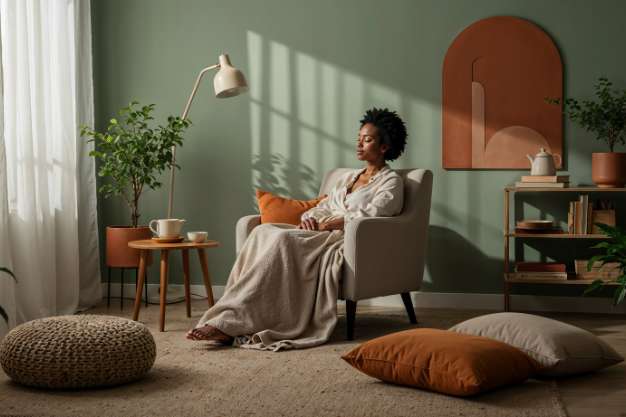
Tactile: the sense of touch is directly linked to comfort and security. Layer soft textures. Think of luxurious throws made of natural fibers like cashmere or linen, plush rugs underfoot, and comfortable seating that invite you to sink in and relax. How about those comfy pajamas or lounge wear that instantly tell your body it’s time to rest?
Aromatic: Scent is the most direct pathway to memory and emotion. Use essential oil diffusers, natural incense, moisturizers, sprays, or scented beeswax candles to infuse your space with calming, cleansing, or energizing scents, such as lavender, eucalyptus, peppermint, cedarwood, lemongrass, orange, or bergamot.
Creating a Physically Restorative Environment
The physical energy of your home directly impacts your well-being. It can improve sleep quality, reduce anxiety and depression, and increase productivity. Decluttering your space and removing anything that’s not functionally needed or doesn’t bring joy and peace.
Ergonomic Furniture: Invest in pieces that are designed to support your body’s natural posture and prevent pain. This includes a comfortable, properly angled chair for reading or meditation, a supportive, high-quality mattress and pillow system for deep, restorative sleep, and a well-designed, adjustable workspace (if you work from home) that minimizes physical strain. This deliberate physical comfort prevents unnecessary fatigue and potential healthcare appointments, allowing for a deeper level of mental and somatic relaxation.
Supporting Energy Flow in the Home
Feng Shui Principles: Embrace the ancient Chinese art of placement to create an energy flow, or chi, that is harmonious and balanced. Decluttering is essential; it clears visual noise and allows positive energy to circulate freely, promoting a sense of order and peace.
Nourishing the Body During Rest
Nourishment and easy access to healthy foods for the body and the soul are essential to your rest-and-digest cycle. A true retreat includes nourishing the body without adding stress through complex meal preparation, guilt-inducing food choices, or unpleasant somatic symptoms.
Healthy and Delicious Foods: Stock your pantry and refrigerator with whole, nutrient-dense ingredients. Focus on simple, fresh meals that are a pleasure to eat but require minimal cooking time. Think vibrant salads, easy-to-prepare whole grains, and fresh fruit for effortless enjoyment. The act of preparing these simple meals should be a meditative experience, not a chore.
Using Color to Shape Mood and Energy
The psychology of colors wields significant power over mood, energy, and creativity, and enhances daily activities. Intentionally select a palette that supports the desired atmosphere for each room.
Supporting Your Mood: Use color psychology to your advantage. Blues and green are often used in bedrooms and bathrooms for their calming, restful qualities. Warm, muted tones like soft yellows or terra-cotta can foster a sense of grounding and coziness in living areas. Conversely, reserve brighter, more stimulating colors for areas where focused activity or creativity is desired.
Enhancing Room Energy: Ensure the colors chosen to align with the room’s function. A home retreat thrives on a palette that encourages tranquility and stability, allowing the mind to unwind fully without having to travel anywhere.