
There was a season when my home felt less like a refuge and more like a place I collapsed into at the end of the day. I would drop my keys, sit in silence, and wonder how I could be so exhausted while technically being “fine.” Nothing was falling apart on the outside. Bills were paid. Life was moving forward. But internally, I was running on fumes—burned out, grieving versions of myself I no longer recognized, and navigating transitions I hadn’t planned for.
For many Black women, survival mode is not an exception—it’s a way of life. You learn early how to be resilient, adaptable, and dependable. You learn how to carry responsibility well, how to make things work even when you’re tired, how to show up polished while holding weight no one sees. And while that strength has sustained generations, it often comes at a cost.
Eventually, the body speaks.
The mind slows down.
The spirit asks for more than endurance.
That was the moment my relationship with home began to change.
When Survival Is No Longer Enough
Leaving my last job wasn’t part of a carefully mapped plan. I was burnt out, mistreated, undervalued, and creatively stifled. Yet I felt a clear nudge to leave—and once I did, I never looked back. There was no backup plan waiting for me, only a deep knowing that staying would cost me more than leaving ever could.
The week after I quit, my hands went to work.
I built my first piece of furniture—a console table—in my home. I didn’t do it for an audience or a launch. I did it because I needed to make something solid after everything had felt uncertain. That table, created in the quiet aftermath of burnout, would later go viral again and again. But in that moment, it wasn’t about visibility. It was about survival giving way to creation.
Art Came Before Answers
Long before furniture, my healing started on canvas.
Canvas art was where my burnout landed first. I painted what I couldn’t yet articulate—layers of color, tension, softness, and repetition. Some pieces were bold. Others were restrained. All of them were honest. Creating art became the only way I could regulate my nervous system when words felt insufficient.
Then came paint—on walls this time. I began repainting rooms not because they “needed” it, but because I did. Color became a form of control in a season where so much felt out of my hands. I chose neutral tones where my mind needed rest. Depth where I needed grounding. I wasn’t following trends; I was responding to my body.
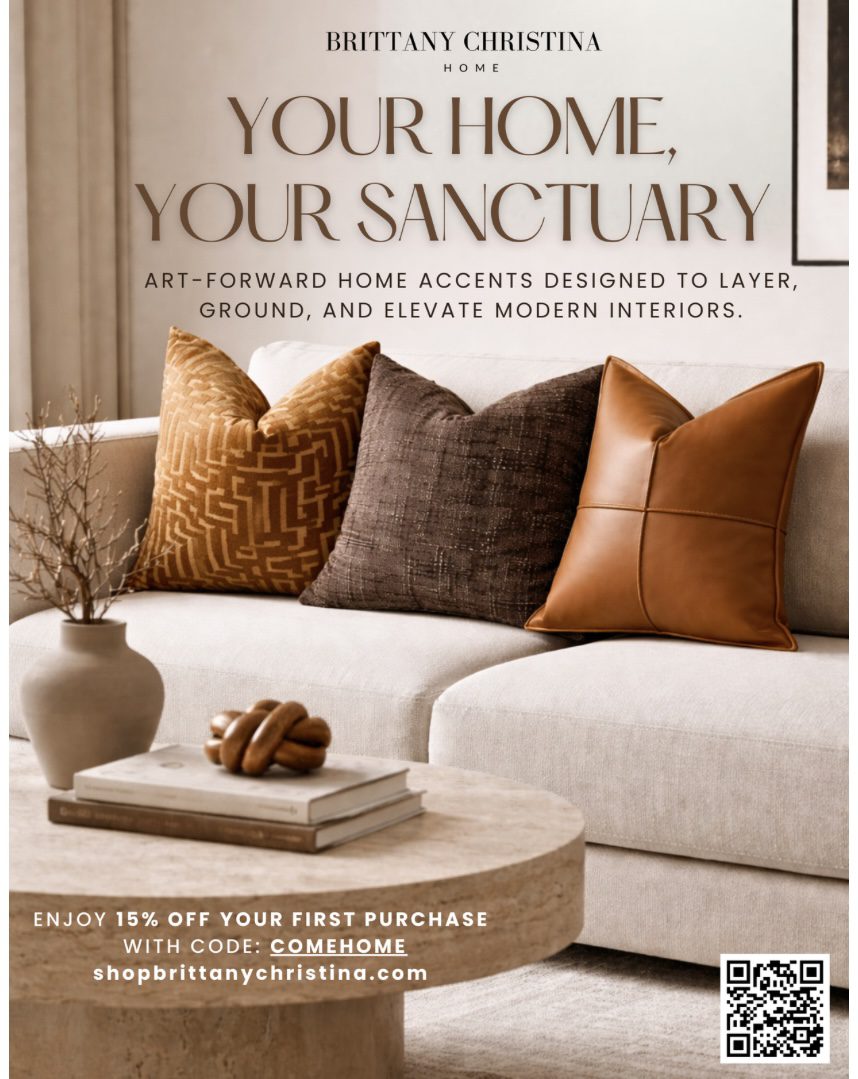
Furniture followed naturally. I couldn’t find pieces that felt like who I was becoming, so I made them. Sculptural forms. Intentional proportions. Objects that felt strong without being harsh. Pillows came last—softness, texture, and detail layered in once my space felt steady again.
What I didn’t realize at the time was that I wasn’t just decorating.
I was rebuilding myself—one creative act at a time.
Making as a Form of Healing
Burnout doesn’t live only in your thoughts. It lives in your body.
The repetition of brush strokes, the physicality of building furniture, the focus required to design something from scratch—all of it slowed my breathing and brought me back into myself. Making became my form of regulation. Not therapy in a clinical sense, but therapy all the same.
It’s no coincidence that creative expression is often linked to emotional well-being. According to the American Art Therapy Association, engaging in art-making can help people process stress, regulate emotions, and improve overall mental health. When you create, you’re not just producing something—you’re releasing something too.
My home became the place where my nervous system could finally exhale.
Every room reflected a season. The art on the walls wasn’t décor—it was evidence. Evidence of what I had survived. Evidence of what I was learning to trust. My DNA is embedded in my home quite literally. Each piece carries memory, emotion, and intention.
Why Sanctuary Matters
Your environment does more than hold your belongings—it shapes how you feel. Research has shown that housing environments can influence emotional well-being and a sense of psychological safety (Riva, 2022). When your surroundings are chaotic, your nervous system often follows. When your space supports calm, clarity becomes more accessible.
This is why sanctuary matters.
Creating a sanctuary isn’t about perfection. It’s about intention. It’s about designing a space that works with you instead of against you. A space that allows you to rest, reflect, and restore—not just exist between obligations.
As my home softened, so did I. As my space became more intentional, my boundaries followed. I stopped creating from urgency and started creating from alignment.
When Healing Finds Its Direction
At some point, quietly and without strategy, people began asking questions.
Where did you get that table?
Who made that piece?
Why does your home feel like a gallery instead of just a living space?
Without realizing it at first, I had begun turning my home into a personal art gallery. Not in a precious or untouchable way, but in a lived-in, conversational one. Every piece told a story. Every room held intention. The furniture, the artwork, the pillows—they weren’t just decorative objects. They were conversation starters. Reflections. Invitations.
My home wasn’t styled to impress—it was curated to express.
Friends didn’t just notice the pieces; they felt the energy of the space. They lingered. They asked questions. They saw themselves in it. What I had created for myself—out of necessity, out of healing—was resonating beyond my walls.
That’s when it became clear: what began as art therapy had evolved into purpose.
I didn’t start with a business plan. I started with a need to feel whole again. But as my home became a gallery of my healing, it also became the blueprint for my brand. The same belief guided both: that home should be expressive, personal, and layered with meaning.
Eventually, that belief took shape as my home décor business—built on the idea that your space can tell your story, spark conversation, and feel deeply personal. Not as a pivot, but as a continuation.
The business was never the point.
Healing was.
The business simply grew from that place.
Coming Home Fully
Spring is often described as a season of renewal, but it’s also a season of remembering. Remembering who you are when you’re no longer in survival mode. Remembering that rest and beauty are not rewards—you don’t have to earn them.
If you’ve been tired, overwhelmed, or disconnected, know this: your home can become an ally. You don’t need a perfect plan or a dramatic transformation. You need permission to create a space that reflects who you are now.
Start small. A canvas. A corner. A color that brings you peace.
These are not minor acts. They are gestures of care. Of reclamation. Of alignment.
And sometimes, when you listen closely to what your hands are making, you’ll realize they’re leading you exactly where you’re meant to go.
References
American Art Therapy Association. (n.d.). About art therapy. https://arttherapy.org/about-art-therapy/
Riva, A., et al. (2022). Can homes affect well-being? A scoping review. Frontiers in Psychology. https://pmc.ncbi.nlm.nih.gov/articles/PMC9736414/