When Home Become Permission
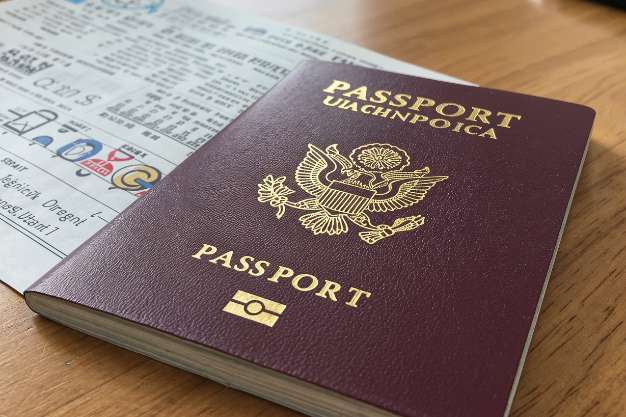
I used to think of a passport as a document—stamps, borders, permission. But home can become a passport too: an internal permission slip that allows you to move freely through the world and, in time, to become a safe space for others.
I am a nurse by training and a co-founder of a non-profit organization, roles that did not remain confined to my professional life. They followed me across borders and shaped how I encountered the world. Leaving my home country did not feel like an escape; it felt like home away from home. Overseas, I encountered a way of living less anchored in certainty and more shaped by presence. Time moved differently. Priorities reordered themselves. Comfort was no longer guaranteed, but purpose often was.
Freedom Is Not the Absence of Risk
I came to understand that freedom is not the absence of responsibility; it is the willingness to remain open even when life is full of risk. In many of the places I served, I was reminded of Mother Teresa’s quiet insistence on spreading love through small acts—leaving every place and person a little better than she found them. Her legacy was not about scale, but faithfulness: showing up fully where suffering exists. That philosophy became a compass for my own work—not to impose, but to impart.
Malaysia & Egypt: When Home Is Memory
In Malaysia and Egypt, for instance, I worked with refugees—people whose homes had been fractured by war, politics, and history. They carried grief and resilience side by side. From them, I learned that home is not always a physical place; sometimes it is a memory, a language, or a shared meal. Despite instability, they built a community. Despite loss, they held themselves together.
Bangladesh: Abundance in Scarcity
In Bangladesh, I discovered that belonging is defined not by blood or proximity, but by responsibility for one another. After the clinic closed for the day, villagers gathered around us with quiet anticipation. A buko was brought out—freshly opened, its water clear and cool. Smiles spread as it was offered to us, the best they had to give.
Only later did the full meaning settle in. This was a place without reliable access to clean water. The coconut water could have been saved, rationed carefully for the days ahead. Instead, it was poured out as a gesture of gratitude.
I remember holding it and feeling the discomfort of being honored in a way that asked something of them. Even in scarcity, they chose to give. In that village, survival was collective by necessity, yet generosity flowed freely. Abundance revealed itself not in what was possessed, but in the care people extended to one another.
India: The Courage to Stay
From there, my path led me to a leper colony in India. I met an elderly man who had lived with leprosy since childhood. Years of illness had shaped his body, but it was the long history of avoidance that had left the deepest marks. As I cleaned and dressed his wounds, he watched me closely, as though waiting for the moment I might pull away.
I stayed—steady in my work—returning again and again to tend to what needed care. When it was done, he looked at me and spoke softly. He said he had never expected someone would willingly touch him after a lifetime of being discriminated against. He told me that he felt truly loved.
His words stayed with me. They conveyed a deeper understanding of beauty—one not shaped by appearance, but by presence. In that space between suffering and care, compassion was exemplified in courage, patience, and the quiet dignity of lives lived fully despite pain and stigma.
Nepal: Joy That Endures
Working with orphans in Nepal further reshaped my understanding of purity—not innocence untouched by pain, but joy that endures despite it. I sat with children who sang their hearts out, thanking God for seeing and caring for them even as the world had been harsh. They had lost much, yet still reached readily for connection and laughter. From them, I learned that grace grows in the cracks and that resilience is nurtured through relationships.
Becoming Home
These experiences reshaped how I see the world—and myself within it. My intuition sharpened, and my judgments softened. What I once believed to be fixed or universal revealed itself as molded by my own limited frame of reference. Beyond it existed countless realities, each deserving understanding rather than prejudice. When familiar structures dissolve, certainty loosens, and self-trust grows through immersion—through learning from the world as it unfolds.
Home, now, is the lessons I carry. It lives in how I show up and offer steadiness in uncertain places. It is the courage to enter unfamiliar territory with humility, leaving behind traces of peace—a quiet reflection of heaven here on earth.
My passport may list where I am from, but my life across countries taught me more about who I am. What remains most vivid are not statistics or outcomes, but people—their hopeful joy. I remember families wrapped in blankets during cold seasons, children whose eyes glimmered with reassurance through education, villages transformed by access to clean water, and the relief of those restored to health and assisted with housing programs. I may not have their smiles framed or preserved, but they remain etched within me.
And wherever I go, I carry this truth: a passport may open doors, but real freedom lies not in belonging everywhere. It lies in trusting deeply enough that I become a refuge—a place where others feel they belong, an essence of home in a hurting world.