
On Juneteenth of this year (2024), rapper Kendrick Lamar hosted a concert called “The Pop Out: Ken and Friends.” This concert came in the wake of one of the biggest rap beefs of all time—and the biggest of this generation—Kendrick Lamar vs. Drake. This beef was predicated on the fact that Kendrick saw Drake as a person who continuously steals from other cultures, or a “culture vulture.” Drake is Canadian, but he has an album where he’s Jamaican, an album where he’s British, and another album where he’s acting like he’s from the hood in Atlanta! This all led to Kendrick calling him out in several songs, with the biggest being “Not Like Us.”
For some context, this was a celebration of the West Coast. It was also a way to let Drake know that Kendrick was good out in the West and still invests in his community. The concert started with DJ Hed and rappers Remble, Ray Vaughn, Jay Worthy, and more! The middle featured DJ Mustard, who brought out Tyler, the Creator, and YG, and the main event was, of course, Kendrick himself. The celebration that ensued reminded me of a very Black event…
It’s A Family Reunion!
If you are Black, you know about the emphasis we put on family and family reunions. Family reunions in the Black community have ties to unifying after slavery ended, and they have become gigantic events.
It’s a time for families and friends to come together, often spanning multiple generations. It’s a space where people can reconnect with relatives they might not see regularly, and an atmosphere of warmth, laughter, and shared memories, creating a familial bond that transcends individual households.
As I mentioned earlier, The Pop Out included LA/California artists from multiple generations like Schoolboy Q, Tyler, the Creator, Ab-Soul, Dr. Dre, Jay Rock, Ty Dolla $ign, and more. It also included celebrities like LeBron James and LA natives DeMar DeRozan and Russell Westbrook, which truly made this celebration rooted in inclusivity within the West Coast community. It represented an open invitation to celebrate and support each other, reinforcing what united them instead of their differences.
It Started Late.
Let’s be real with ourselves as Black folk… we’ve all heard that the event starts at 3:00, and the tables aren’t even set up by 3:30! The Pop Out was supposed to begin at 7 PM EST, but when the broadcast aired at that time, they were still setting up the stage. Though we are often criticized for starting late, it’s important to understand what this represents. It represents an emphasis on the experience rather than the schedule. Starting late can be seen as an expression of flexibility, allowing the gathering to unfold organically and giving people a chance to arrive and settle in without an emphasis on punctuality.
Group Pics.
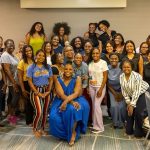
Now you know there’s always that one family who has to take a group picture of EVERYBODY. They try to wrangle everyone from the oldest to the youngest together to take a group pic, and this concert was no different. After Kendrick played “Not Like Us” (for the fourth time), he paused and tried to get everyone on the stage for a group pic. This was symbolic of how we all have this sense of togetherness. We get to the festivities and are having a ball, but then we stop and gather the whole family for a big group picture because we don’t know when we’ll get together again.
All Fighting Was Stopped.
Unfortunately, one of the most notable aspects of Los Angeles culture is gang culture. I’m sure that you have all heard about how two different groups of individuals tend to clash out there. However, that night… all clashing groups were in solidarity. Different gangs like the Bloods and the Crips were dancing together. There may be some fighting or “beef” between family members, but at a family reunion? All that fighting stops, and we all become a big happy family, at least for the time being.
It felt like the entire county of Los Angeles was at the Pop Out. There were countless celebrities in attendance, but only a select few were allowed on stage. If you weren’t from LA, you were part of the general crowd. This… resonated with me. To me, it symbolized that this was truly a family affair.
They Kept it in the Family
Think of it like your inner circle of friends—those you love and care about deeply. They might show up at your family reunion, but they aren’t always in the group pictures. While they know you value them, they also understand they’re not quite in the family photo yet. To me, this speaks to the strength of familial bonds—ties that run deep through every family, especially Black families—and it was clear throughout this concert.
The Pop Out’s celebration of unity through music echoes a long-standing tradition within Black culture, where music has always been a cornerstone of collective resilience and togetherness. From the spirituals sung during slavery to communicate and find solace, to the freedom songs of the Civil Rights Movement that galvanized a generation, music has continuously served as a powerful medium to unify and inspire. This event, much like those historical instances, showcased how music transcends individual differences and conflicts, creating a sense of communal strength and solidarity.
Kendrick Lamar’s ability to bring together diverse artists and audiences, much like the leaders of past movements, underscores the enduring power of music to heal, unite, and remind us of our shared heritage and collective resilience. The Pop Out was not just a concert; it was a reaffirmation of the enduring spirit of Black culture, emphasizing that even in the face of adversity, unity and cultural pride will always prevail.