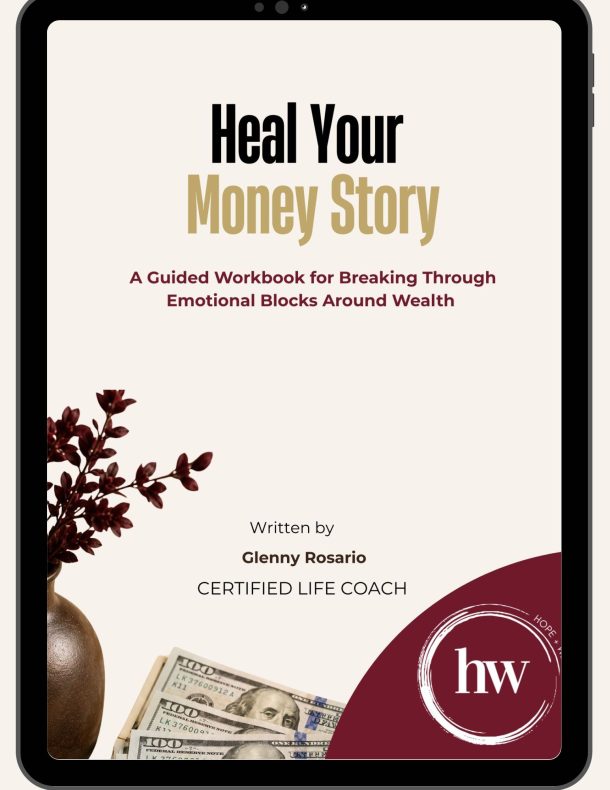

We often find ourselves intrigued by articles and posts that describe the habits of successful people. It’s a valuable practice to reflect on the origins of your definition of success and assess whether you’re actively living in alignment with it. While accumulating wealth is undeniably important for obtaining many things we associate with success, being mindful of your own definition of success and how you achieve it can help you feel less like a passive consumer of societal pressures and more like an active participant in your journey. Defining success on your terms is a powerful, liberating tool. To move beyond autopilot while thinking about success, we can broaden our perspective in four ways.
Explore Additional Outcomes
The definition of success is “the accomplishment of an aim or purpose” (Oxford Languages). This means that success is determined by the goal you set for yourself. The first step toward achieving true success is to ensure your goals align with your values and authentic desires. Take time to consider all aspects that contribute to a fulfilling life. Consider your health, personal relationships, mental well-being and sense of purpose, to name just a few. As you envision your future, try engaging all five senses to create a vivid, meaningful picture of success. Rather than focusing solely on what it looks like, imagine how it feels, who’s there with you and the sounds and smells that define a successful life. Activating the five senses can make it easier to uncover why health and relationships are just as important as financial success, maybe even more so. When we broaden our outcomes to include all parts of ourselves, our success is more likely to feel fulfilling.
It’s important to recognize that your version of success may not be understood or appreciated by others, especially those who don’t know you well. People may not define you as “successful” according to their standards. Embracing this reality is an important part of freeing yourself from restrictive notions of success and achieving a more personal, authentic sense of accomplishment. Everyone’s definition of success will be unique to them.
Distinguish the Object from the Outcome
On autopilot, we are susceptible to confusing the appearance of something as the thing itself. For example, a person living in a big house may appear they have power, but it does not necessarily mean that. “Many of our judgments about people and their worth are disproportionately determined by what those people own or wear. We spend great energy and wealth acquiring these objects associated with power rather than real human, social, political, and economic power. There is a frequent tendency to confuse tokens of power with genuine power, based upon the slavery experience” (Akbar, 1996).
Dr. Akbar highlights the connection between capitalism and slavery as systems that have left us with a legacy of misunderstood materialism. Much of the root of disproportionate focus on money as the main outcome is intertwined with one of the most detrimental exploitations of labor in human history: American slavery. As part of our liberation from that aspect of our history, we can make the mental effort to separate the appearance of material wealth from the outcomes we are interested in. When you encounter something material that you mentally link to success, ask yourself, “What am I assuming about this appearance?” This question can reveal what you truly desire.
Add Process Goals
Most goal-setting practices are outcome-focused. This leads us to spend a disproportionate amount of attention and effort on results and achievement. Adding process goals to our pursuit of success can balance out this focus. Success is not just about the result but about how we accomplish those goals. For example, you may decide that you want to take on a new professional project while holding a strong boundary around the time you spend with your family. In this example, you could imagine a scenario where you meet your process goal (holding your boundaries around family time), and the professional project does not do as well as you hoped. In this scenario, formulating a process goal can help you see that this was a partial success.
As you move towards your goal, it’s important to consider not only what you want to achieve but also what characteristics you want to embody and live by along the way. Hustle culture often glorifies traits like “relentless,” “focused” and “determined” as the keys to success. However, qualities such as “honesty,” “integrity,” “joy,” “grace” and “thoughtfulness” also hold immense value. As you reflect on the adjectives that resonate with your journey, you may realize that some of them could slow your progress. Embracing this and recognizing that success may not always appear as expected is a crucial practice to cultivate.
Creatively Align Resources with Goals
John Hope Bryant said, “You can make money two ways — make more, or spend less.” This quote is about financial strategies, but we can also use this concept for success overall. Reassessing how we use our resources on the road to success, no matter how you define it, can lead to unique, creative and empowering solutions.
One of my friends, for example, values minimizing food waste and puts effort into aligning her actions with this belief. She buys from companies that sell “unwanted food,” supports local give-back programs and food pantries and manages her consumption to reduce waste. While this approach helps her save money, it’s the creative way she uses her resources in line with her values that truly contributes to her sense of success. For many people, managing existing resources through innovative thinking and problem-solving brings a deep sense of accomplishment. It also fosters cooperation with others and encourages seeing things from new perspectives. Moreover, this mindset cultivates a greater appreciation for what we have rather than focusing on what’s missing. Research consistently supports how gratitude can positively impact mental health (Deniz et al., 2023). Ultimately, being resourceful leads to a more sustainable approach to success and overall well-being.
Think of holistic wealth as your own, personal way of defining success. Consider broadening your view of success and yourself by revamping traditional financial goal setting into a vision of who you want to be and how you want your life to look. Money is a small part of who you are and what you are capable of.
https://languages.oup.com/google-dictionary-en/
https://archive.org/details/BreakingTheChainsOfPsychologicalSlaveryByNaimAkbar
https://johnhopebryant.com/2012/09/financial-literacy-quote-of-the-day-2.html