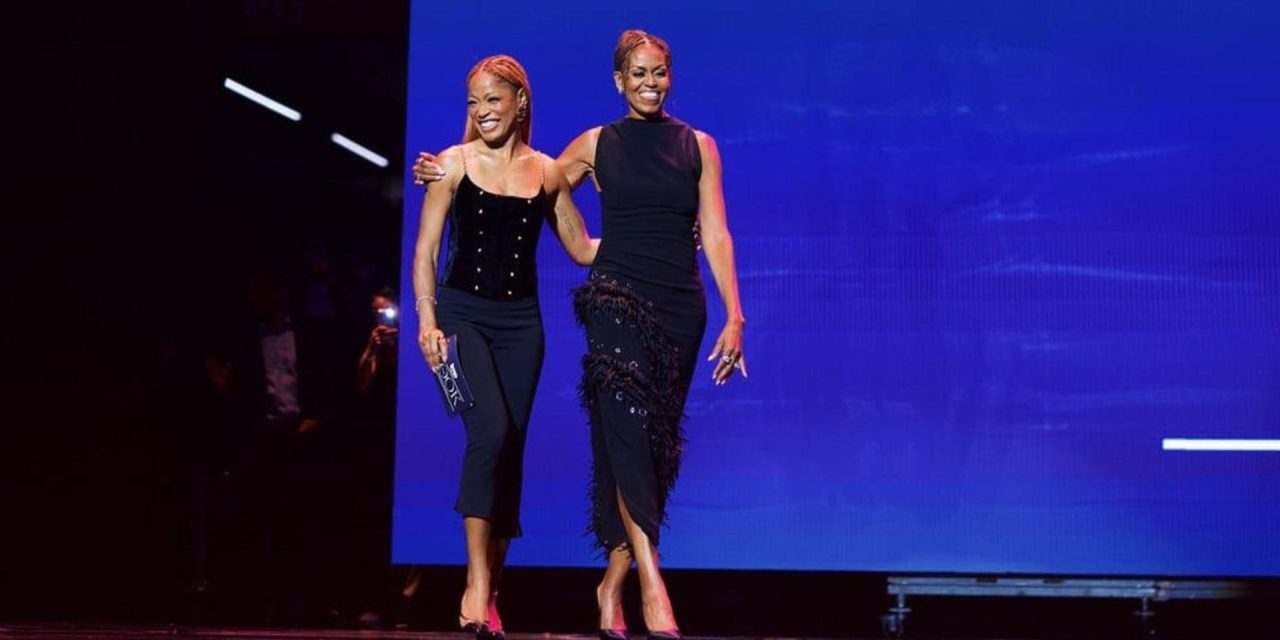
When Michelle Obama stepped onto the stage at the 2026 Essence Festival, the conversation quickly turned to what she was wearing. Dressed in a striking black dress designed by Rachel Scott, the Jamaican born creative director of Proenza Schouler, Obama’s look drew admiration across social media and fashion publication alike. It was another reminder that style has always been a language of its own.
Former First Lady Obama’s appearance spoke a language of its own as she and none other than KeKe Palmer, discussed her upcoming book, The Look, a reflection on fashion, hair, confidence, and the ways personal style shaped her public life. Throughout the conversation, she acknowledged something many women understand intuitively; the choices we make about how we present ourselves are rarely just about clothing. They are often tied to identity, self-expression, culture, and belonging, and for Black women, that relationship can carry even greater significance. Hair, clothing, and appearance have long existed at the intersection of creativity and scrutiny. As Black women, we have navigated expectations about professionalism, beauty, respectability, and authenticity all while being told that we’re either too much or not enough. Every hairstyle, silhouette, and fashion choice has the potential to become part of a broader cultural conversation.
Michelle Obama, has been the only one in the White House to openly discuss the unsolicited opinions about her appearance she received as a Black woman in the White House. However, she chose to embrace her identity despite those opinions. Whether wearing emerging Black designers, embracing natural hairstyles, or stepping onto global stages with unmistakable confidence, she has consistently demonstrated that style can communicate values, honor heritage, and celebrate individuality while opening doors for other creatives.
Her appearance at Essence festival reflected that same spirit. By choosing a look connected to Rachel Scott’s creative leadership, First Lady also spotlighted a Black woman helping shape one of fashion’s most respected luxury houses, and it confirms another important truth that people often skate over. Representation is not only about those who are taking center stage in front of the camera. It is also about the designers, stylists, editors, makeup artists, photographers and creative directors whose work influences how culture is seen and remembered. Perhaps this is why Michelle Obama’s upcoming book feels so timely. At a moment when conversations around image often revolve around trends and algorithms, The Look invites us to think more deeply about personal style as an extension of our lived experience rather than simply a wardrobe.